
Your Guide to Healthcare ITManaged Services in 2026
Introduction to Healthcare IT Services by Vulcan Telecom
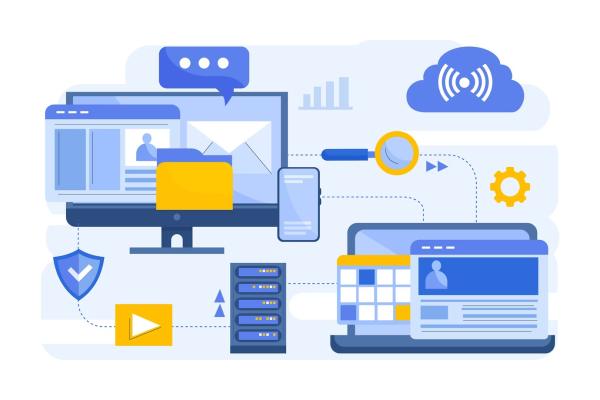
In today's quickly changing digital world, Managed IT Services in the Healthcare Industry are no longer merely a support role; they are a strategic need.
As healthcare companies increasingly rely on complex technological infrastructures. So selecting the correct IT management partner may mean the difference between operational efficiency and systemic danger.
This detailed guide delves into what managed IT services are, why they are important in healthcare, the primary benefits, critical components, obstacles, and best practices for effective deployment.
What is Managed IT services in Healthcare industry:
Managed IT services for Healthcare industry is a third party or an outsourced technological services for any healthcare sector.
Their main focus is on providing management of data, system uptime and disaster recovery services monitoring systems, security and support including proper network maintenance.
Managed IT services covers every sector of the healthcare industry from patient privacy protection to smooth electronic health records eliminating downtime and data loss.
Why use a managed IT services in Healthcare industry:
Technology has become very advanced in the modern era and cybersecurity issues are more active than ever.
The healthcare industry required updated infrastructures, well oriented systems and stringent regulation like HITEC and HIPAA. That’s why a well managed IT support system is today’s most required necessity.
Healthcare industry will get following benefits with a well managed IT system:
- Updation: Well managed and updated system ensures compliance.The data will be updated and industry will be saved from heavy fines.
- Productivity optimization: Scalable IT services will boost industry performance and efficiency.
- Strong security:The proactive measures of well managed IT services will provide protection for the data of sensitive patients.
- Offload technical burden: Managed IT services in the healthcare sector will reduce IT burdens so the hospital management focuses on patients.
- Downtime reduction:Consistent downtime impacts the healthcare industry in a long run and damages your operational efficiency.
What Healthcare IT managed services provide?
The healthcare industry always needs a system that continuously monitors their applications, networking, servers and recognizes the bad event before it happened. Although security and identity management services are not only the services offered by any well managed IT support team to healthcare professionals.
IT managed services includes and covers the following areas of the healthcare sector.
Data and cybersecurity:
Healthcare systems have many cybersecurity threats including malware, ransomware and phishing.
Therefore the managed IT services provide continuous security monitoring. 83% of Healthcare providers already experienced cyberattack.
The security threats will damage hospital data, sensitive patient information, change lab results, critical medication list and private patient diagnosis reports.
Encrypted files, phishing and viruses in operating systems are the prevalent types of targeted cyberattacks on medical persons.
Managed IT services can help healthcare professionals to leverage the updated technology. Auto update also protects patients data and proper continuous management will counteract cybersecurity risks before the actual results breaches.
Data updations and backups:
Managed IT services are best for the healthcare industry as they not only secure the critical information but they also have data backup solutions. Backups can be restored quickly after any data loss incident or natural disaster.
Better and easier compliance:
Healthcare sectors strict data privacy laws lead to serious penalties when any failure happens. But a well managed IT support system can manage heavy lifting with compliance audits.
Their continuous management with automatic updating will reduce the risk of new threats with regulatory changes.
Meeting standards like HIPAA, HITRUST, and ISO 27001 requires documented policies, regular audits, and secure architectures.
Managed providers help define compliant processes and perform risk assessments to maintain adherence.
Support for Electronic Health Records (EHR):
One of the most important parts of healthcare IT is keeping up with Electronic Health Record systems. Managed providers guarantee that EHR systems run efficiently, are often backed up, and are updated with the least amount of interruption.
Cloud Management and Infrastructure:
The use of cloud computing in healthcare improves disaster recovery, scalability, and accessibility. Cloud migration, security setup, cost reduction, and continuous monitoring are all handled by managed services.
Technical Support and Help Desk:
When systems malfunction, whether it's with scheduling software, tablets on the floor, or printing patient documents, healthcare workers need trustworthy IT Assistance services .
Managed services offer round-the-clock help desk assistance customized for medical procedures.
Why Choose managed IT services in Healthcare:
- Choose experienced Services: Must prioritize experienced IT support systems especially specialized in EHR support, cybersecurity and regulatory compliance.
- Definitive services level Agreement: Your selected managed support team must have SLAs.They should respond on time, guarantee data protections and have escalations with procedures. Although defined KPLs ensure accountability.
- Room for updation: Must select a healthcare service holder having room for continuous improvement. As the healthcare world is evolving rapidly so the providers should ask for regular feedback, optimization strategies and support future innovations.
How Vulcan Telecom provides the best managed IT services to healthcare industry:
In order to empower healthcare businesses, Vulcan Telecom offers industry-specific VoIP and IT solutions that match advanced technology.
Vulcan is a managed IT Services company in Birmingham whose main mission is managing all medical technology needs so hospitals can only care about patients.
The solutions guarantee smooth phone system EHR integration, secure cloud storage, dependable communication, and robust cybersecurity that are customized to healthcare operations and expansion.
Vulcan telecom healthcare IT services In Birmingham AL will strongly protect data of sensitive patients.
Their services are never off-the-shelf; instead, they are designed to support uptime, protect data, and optimize performance with proactive monitoring, customized IT systems, and reliable VoIP communication.
Bottom lines:
Managed IT services in the healthcare business are no longer optional—they are required. These services help healthcare businesses function more efficiently, safely, and effectively by enhancing cybersecurity, maintaining compliance, and allowing digital transformation.
Healthcare facilities may focus on their primary purpose of providing great patient care by working with the right managed IT services provider, putting complicated IT difficulties in the hands of experts.
If your healthcare institution is considering managed IT services, use this guide to help you plan your strategy, ask the proper questions, and make decisions that will lead to long-term success.